 1-800-584-4944


How to Prevent Frozen Well Water
Never Worry About Frozen Well Water Again
If your home, cottage or business relies on a well as a primary water source, frozen well water can cause significant issues in the winter. Cold winter temperatures can lead to reduced water pressure, or no water coming out of the taps. These issues generally aren’t because the well water or riser has frozen but are commonly the result of the water pipe from the riser to the building freezing.
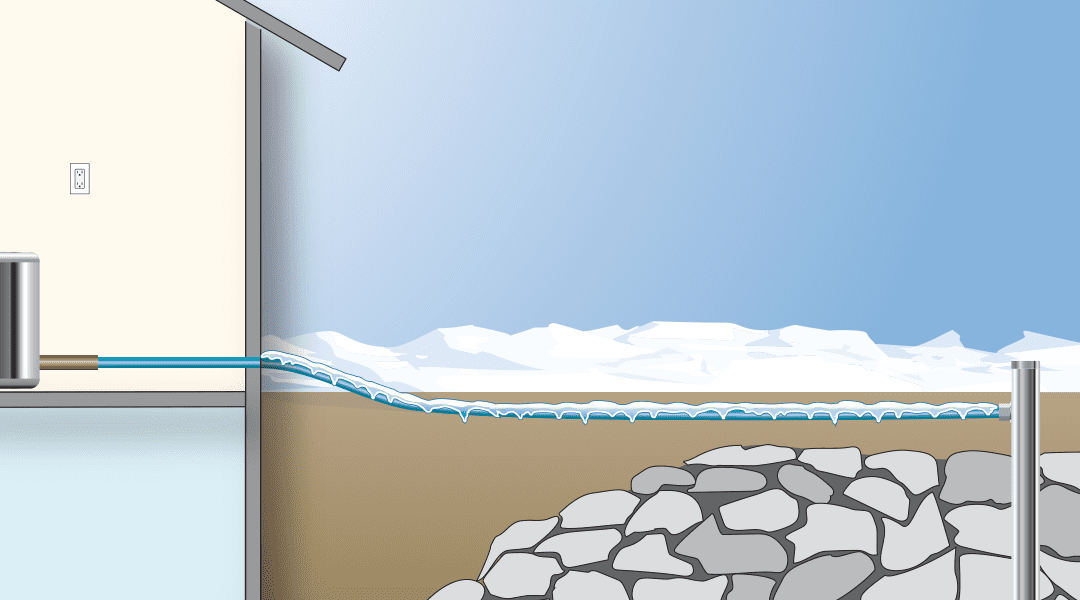
Wells are often dug or drilled deep enough below the surface to prevent the water from freezing even in the coldest temperatures. The issue is with the pipes closer to the surface. If a well water pipe is not buried below the frost line at every point along its length, extreme cold temperatures can cause the water in the pipes to freeze. A frozen well line can lead to problems ranging from the inconvenience of low or no water pressure to more expensive water damage and the need to replace a burst pipe.
How to Prevent Frozen Pipes from a Well
A self-regulating heating cable system is an easy way to protect the pipes from your well from freezing. Unlike conventional hardware store heat tape, Heat-Line self-regulating heating cable systems are reliable, long-lasting solutions to prevent well water supply lines from freezing. Heat-Line self-regulating heating cables adjust to changing temperatures, providing optimal energy efficiency while preventing overheating. By automatically adjusting heat output based on surrounding temperatures, the risk of overheating and damaging water pipes is eliminated; the self-regulating technology offers an energy-efficient solution to preventing frozen well water.
Choosing your Heat-Line Cable Solution
There are two widely used methods for protecting your well water supply pipe from freezing with a Heat-Line system. The first is installing a heating cable system on the inside of the pipe, the second is installing a heating cable system on the outside of the pipe. Retro-Line is a complete job ready system supplied with a factory finished heating cable, plumbing fittings and power lead. It is easily installed inside new or existing well water supply pipes without the need to excavate. Paladin for Pipe (or EXT-R at long lengths over 240’) is an on-pipe solution that protects the pipe from freezing by applying heating cable on the outside of a well water supply pipe. Both Paladin/EXT Series and Retro-Line employ the unique and advanced performance of self-regulating technology which makes the systems highly energy-efficient and safe to insulate.
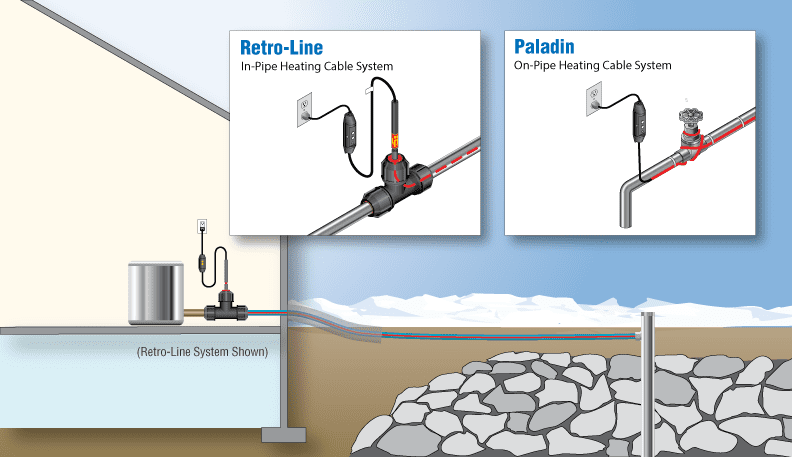
In a Well Water Supply Pipe with Retro-Line
- Fully certified to the highest standard in North America for electrical and drinking water safe (not all freeze protection systems on the market carry adequate certifications, always check)
- No need to dig up the pipe; it is easily installed into the existing water pipe
- Supplied to the exact length required for the job
- System supplied complete with plumbing components, self-regulating heating cable factory terminated and power lead with GFCI protected plug end
- Will never overheat, is suitable for installation on both plastic and metal pipes
- Can be combined with a control device to increase energy efficiency
On a Well Water Supply Pipe with Paladin for Pipe or EXT-R Series
- Fully certified to the highest standard in North America for electrical and carries approvals for direct earth burial and wet location
- Typically done when replacing a damaged pipe or during new pipe installations, though some may choose to excavate to install the heating cable
- Will never overheat, is suitable for installation on both plastic and metal pipes
- Adding insulation to pipes after installation will further increase energy efficiency
- System supplied to the exact length required for the job
- System supplied with self-regulating heating cable factory finished and power lead with GFCI protected plug end
- Can be combined with a control device to increase energy efficiency
How to Install Retro-Line in a Well Water Supply Pipe
- Measure
When adding a Retro-line system to a buried pipe, using a plumber’s fish tape is the simplest way to measure the length of the pipe. It’s important to note that most drilled wells use a pitless adapter to connect the pipe coming from your building to the pipe going down into the well. It is crucial to account for this in your final measurement. Once you have measured the length of the pipe with your plumber’s fish tape, you will need to subtract 3 inches from that measurement. This will ensure the end seal of your Retro-Line cable will not get damaged if the pitless adapter is ever removed to access the pipe to your well for service.
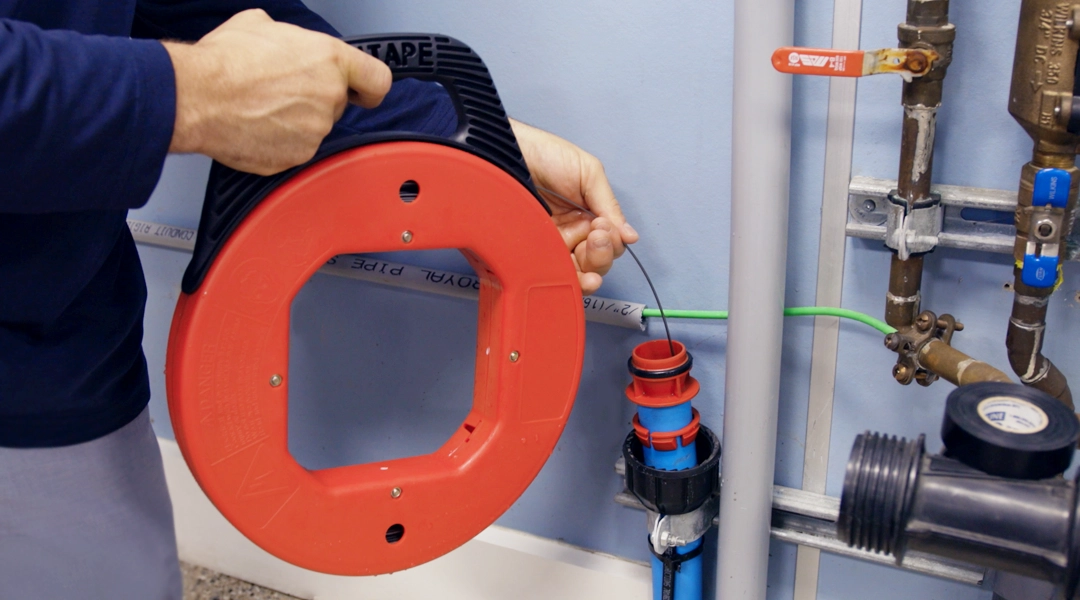
For an easy guide to measuring your buried pipe, see our video:
Order the Retro-Line system to this length and suitable fittings for the pipe. (Our experts can help guide you with this if you need clarification on what you need.)
- Install the System
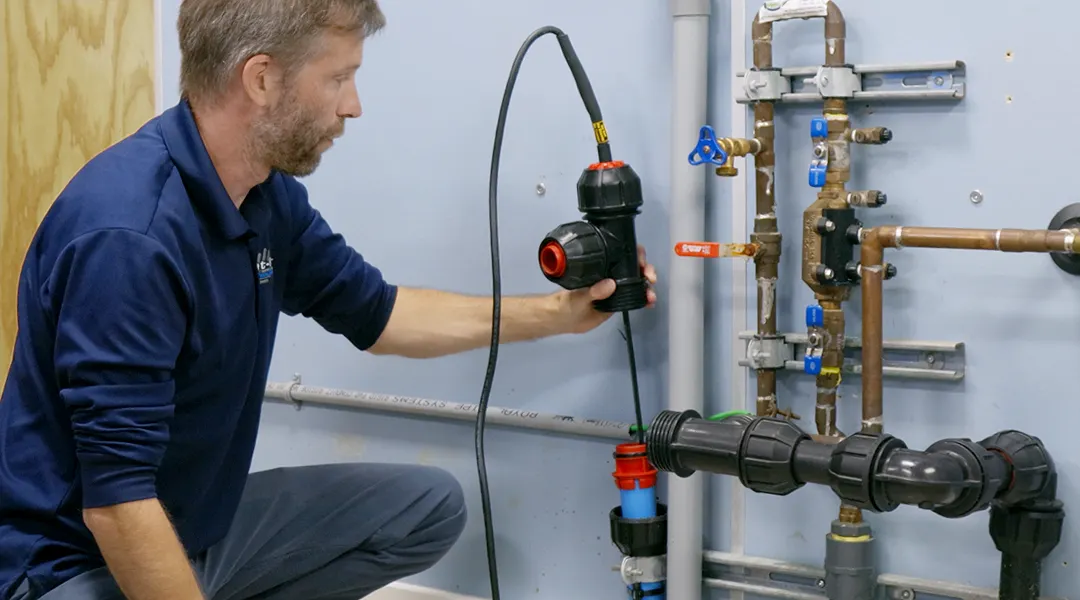
Start at the end of the pipe inside the building. Cut the pipe to accommodate the fittings and install the heating cable into the pipe. Install the included fittings onto the pipe creating a watertight seal. Homeowners can install this themselves, though others may prefer hiring a plumber. (Follow the Installation Instructions for complete and accurate instructions.)
- Insulate
Once the system is installed, insulate any sections of pipe exposed above ground. Use the appropriate insulation material recommended for outdoor locations. Additional mechanical protection may be added over the insulation for increased life expectancy.
- Connect to Power
Plug the system into a power source as per the installation instructions. Ensure the power supply is adequate and meets all safety requirements.
How to Install Paladin/EXT on a Well Water Supply Pipe
- Measure
Determining the length of the Paladin or EXT heating cable required for common external heat tracing could not be simpler. Most pipes that are 2 inches (51mm) or less in diameter only require a single run of Paladin or EXT heating cable along the length of the pipe. Simply measure the length of the pipe you are freeze protecting, keeping in mind where the power source connection will be. For larger pipes, provide the pipe diameter as well, and our experts can determine the exact length required.
- Install the System
If your Paladin or EXT system is the same length as the pipe, run it straight along the pipe in the 4, 6 or 8 o’clock position. Fasten the cable to the pipe using aluminum foil tape, quality fiberglass tape or plastic cable ties. Aluminum foil tape may be installed over entire length of heating cable for increased heat transfer and to keep heating cable in constant contact with pipe wall. Homeowners can install this themselves, though others may prefer hiring a plumber or electrician. (Follow the Installation Instructions for complete and accurate instructions.)
- Insulate
Once the system is installed, insulate all accessible pipe sections — both above ground and buried. Insulating above-ground sections is essential for complete freeze protection, and adding insulation to buried pipes is highly recommended to further improve energy efficiency. Use the appropriate insulation material recommended for outdoor locations. Additional mechanical protection may be added over the insulation for increased life expectancy.
- Connect to Power
Plug the system into a power source as per the installation instructions. Ensure the power supply is adequate and meets all safety requirements.
If you’re looking for a system that includes pipe, consider Heat-Line or CARAPACE. Heat-Line combines Retro-Line self-regulating heating cable system with 75 PSI polyethylene pipe, ideal for new installations or pipe replacements. CARAPACE features a self-regulating heating cable extruded directly onto polyethylene pipe, protected by a high-density shell.
Thermostats and Timers for Heating Cable Systems
To further increase energy efficiency, a control device can be added to a Heat-Line system. All Heat-Line systems utilize self-regulating technology. With self-regulating technology, control devices such as a thermostat or timer are not required, but they can serve as optional accessories to further increase energy efficiency. If the well water pipe is accessible, a thermostat can be used with the sensor positioned on the coldest section of the pipe to ensure accurate temperature regulation. If the coldest section is located far from where the thermostat is plugged in, an extended sensor may be necessary. Alternatively, if the coldest section is inaccessible, such as in an in-pipe system application, a timer device can be used to duty cycle the heating cable operation ON and OFF, reducing energy consumption. These devices work in conjunction with the self-regulating functionality, further reducing energy consumption and lowering operating costs. Our sales team can assist determining suitable control device options for your application.
Reliable, Long-Lasting Freeze Protection
Whether you choose a Retro-Line, Paladin/EXT Series system or a pipe combination system, you can be assured you will use the most reliable, longest lasting and energy-efficient freeze protection system available, fully CSA-certified for your safety. And most importantly, you will never have to worry about a frozen well line again.