 1-800-584-4944


How to Prevent a Frozen Water Softener Line
A water softener is commonly used to treat hard water from sources such as private wells. By removing minerals like calcium, magnesium and iron, it prevents scale buildup, clogged pipes, leaky faucets, and wear on water-based appliances.
Every water softener must run a regeneration or backwash cycle at least once a week. In rural homes with septic systems, the regeneration water is often discharged outdoors through a small-diameter drain line that leads to a dry well or French drain. In cold northern climates, these outdoor drain lines are highly susceptible to freezing.
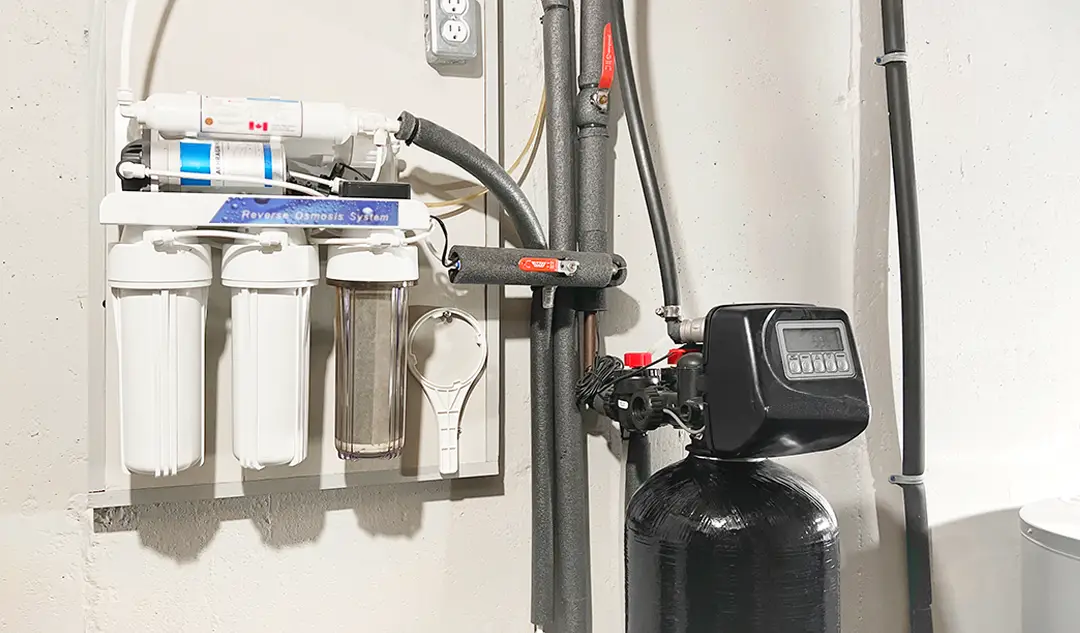
Frozen water softener drain lines can lead to several issues, including:
– Blocked or incomplete regeneration cycles
– System shutdown or error codes
– Flooding or backflow inside the home
– Damage to pipes, fittings, or the softener itself
With small-diameter drains as narrow as 1/2 inch, even a small amount of ice can cause a complete blockage.
What Causes a Water Softener Drain Line to Freeze
– Exposure to outdoor winter temperatures
– Standing water left in the line after regeneration
– Long or horizontal runs to dry wells or French drains
– Small-diameter pipes that freeze quickly
Q: How do you prevent a frozen water softener line?
A: Install an in-pipe, self-regulating heating cable system to keep the water softener drain line fluid and prevent freezing.
Why a Self-Regulating In-Pipe Heating Cable System Works Best
– Easily installs inside the pipe
– No need to excavate buried pipes or modify lines routed through existing walls
– Self-regulating technology adjusts heat output automatically
– Safe for both dry and wet conditions
– Effective even in severe cold climates
– Simple installation with job-ready kits
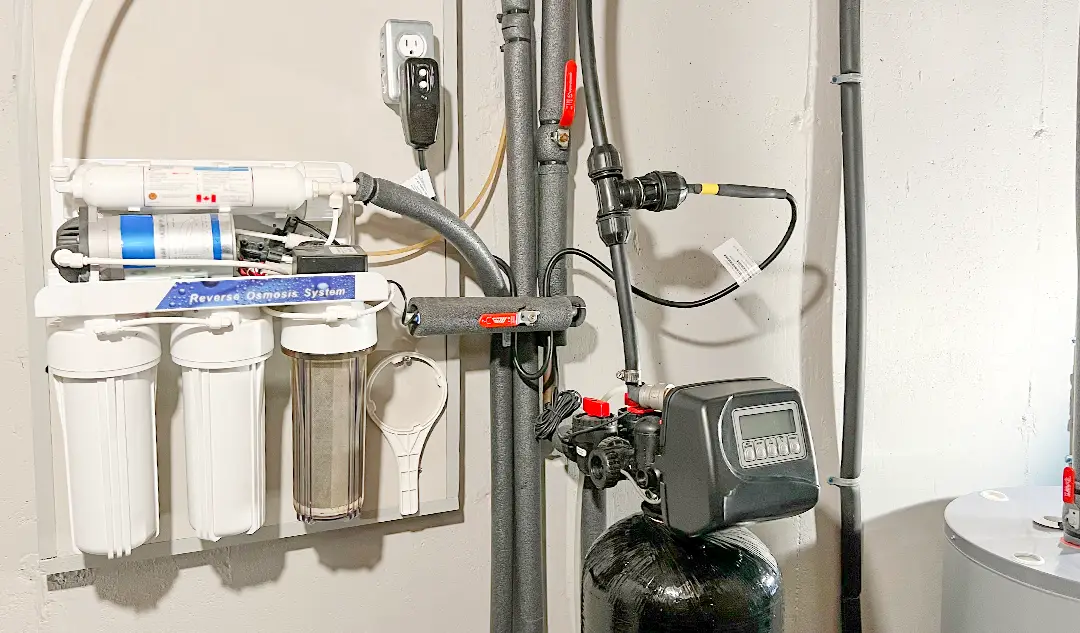
Why Retro-Line Mini Is Ideal for Water Softener Drain Lines
Water softener drain lines are often very small in diameter, sometimes only 1/2 inch. Retro-Line Mini by Heat-line is engineered specifically for pipes with a 1/2-inch ID and is the only system on the market designed for freeze protection in applications this small.
Key Benefits of Retro-Line Mini:
– Designed for small-diameter pipes
– Self-regulating heating cable technology is safe in dry plastic pipes and energy-efficient
– Certified for use in water filled pipes and wet locations
– High quality, reliable freeze protection for a long-lasting solution
– Includes all plumbing fittings and the power supply for quick installation
– Fully compatible and safe for use in high-salinity water softener discharge
This self-regulating behaviour is essential for water softener drain lines, which alternate between being full of water and completely dry. Retro-Line Mini adjusts automatically with no risk of overheating.
Heat Tape vs Heating Cable
Some homeowners consider using heat tape, but it’s not suitable for this type of application. The Retro-Line Mini system is the safer and more effective option.
Why the Retro-Line Mini Heating Cable System Is Better Than Heat Tape:
– Heat tape cannot be installed inside a pipe
– Many heat tapes are not rated for use on plastic pipes or dry pipes
– Heat tapes are not safe or certified for wet locations
– Many heat tapes are not rated for use in contact with high-salinity water discharge
– Heat tape does not self-regulate and may overheat
FAQ About Freeze-Protecting a Water Softener Drain Line
Can my water softener drain into my septic system instead?
It is not recommended. Draining into a septic tank can affect septic performance over time. An outdoor drain line is often recommended by plumbers and septic contractors.
What size heating cable do I need for a water softener drain line?
For small-diameter water softener drain lines (1/2 inch ID to 1 inch), the Retro-Line Mini is the correct choice. For larger diameter water softener drain lines, the EXT-T system described below is the appropriate choice.
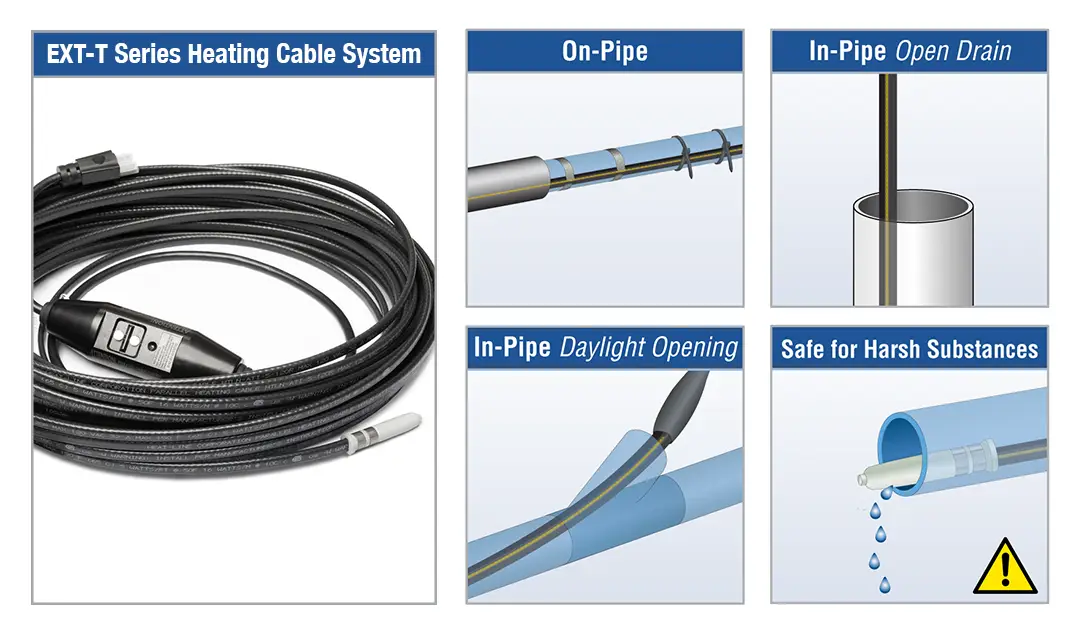
Other Heat-Line Systems for Water Softener Drain Lines
Heat-Line also offers another solution suitable for on-pipe and in-pipe freeze protection of water softener lines.
If a fitted connection is not required and freeze protection is only needed at the outflow or gravity-fed drain section, the EXT-T heating cable system can be inserted through a daylight opening at an appropriate junction. Alternately, it can be applied directly to the outside of the pipe for its full length, with extra cable laid into the dry well or French drain for complete.
The EXT-T system is safe for all the same reasons the Retro-Line Mini is:
– Safe in salty water softener discharge
– Safe on dry plastic pipes
– Self-regulating to prevent overheating
– Can be used for the pipe section as well as the dry well or French drain
The key difference is in its application. EXT-T does not include the fittings required for a sealed, fitted connection inside the pipe. Instead, it is installed externally on the pipe or inserted through a daylight opening in gravity-fed drain sections.
Final Thoughts
If your water softener drains outdoors to a dry well or French drain, freeze protection may be necessary depending on your plumbing setup and exposure. Retro-Line Mini and EXT-T provide safe, efficient and dependable in-pipe freeze-protection solution uniquely suited to water softener drain lines.
With the right system in place, your water softener can regenerate properly all winter long, preventing freeze damage and ensuring reliable soft water throughout the colder months.