 1-800-584-4944



How to Winterize a Lake Water System
If you own a cottage that relies on water from a lake, losing your water supply due to a frozen line is one of the biggest concerns during the winter.
Issues from a frozen water supply from a lake water line can range from a minor inconvenience, such as thawing out your frozen pipes, to more intensive and expensive repairs, like excavating to replace a burst pipe and renovating to fix water damage.
Since these issues occur during sub-freezing temperatures, making repairs outside can be difficult, stressful and expensive.
While the answer to “How to get water from a lake in winter?” may seem daunting, we have simple solutions explicitly engineered to winterize a water line using a heated water line from the lake.
Key Takeaways
- If a water line is not buried below the frost line, it must be winterized to provide water supply year-round.
- A self-regulating in-pipe water line heating cable system is the best way to winterize a lake water system.
- It’s important to choose the right water line heating cable system for water supply lines.
- The Retro-Line in-pipe heating cable system by Heat-Line is specifically engineered to winterize a lake water system.
- Constant-wattage heat tape and other low quality heating cable systems have several disadvantages for winterizing a lake water system.
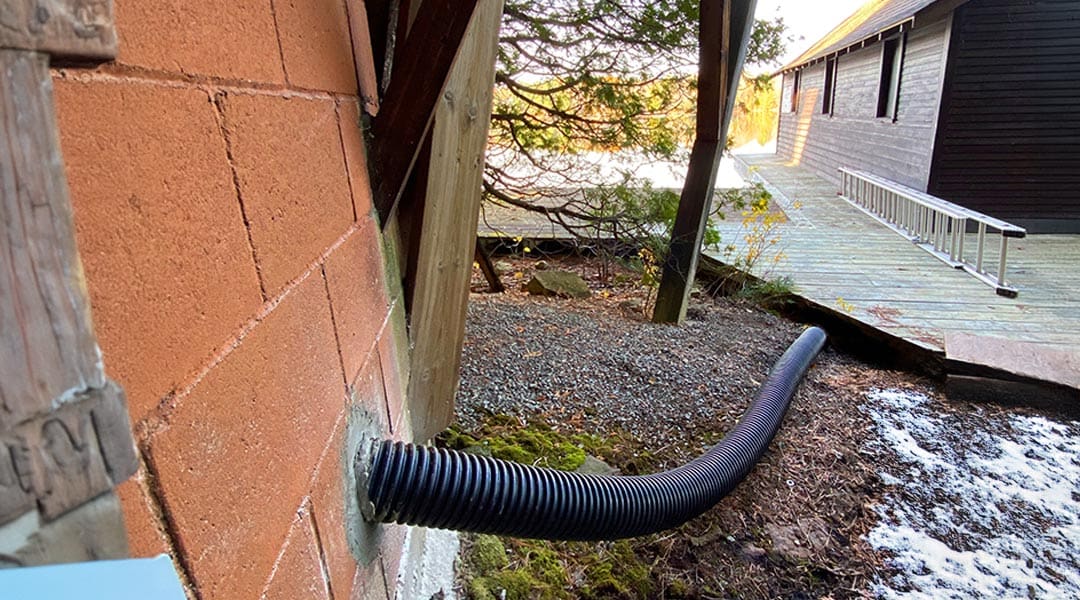
How to Winterize a Water Line at the Cottage
If your water line is not buried below the frost line for its entire length (most are not), a heating cable system is installed to winterize your water line. The Retro-Line in pipe heating cable system by Heat-Line is engineered to freeze protect a water line from the lake in winter. This system has several advantages over constant wattage water line heat tape and other low quality heating cable systems typically found in hardware stores or on other large retailers online. We’ll learn the difference in the next section.
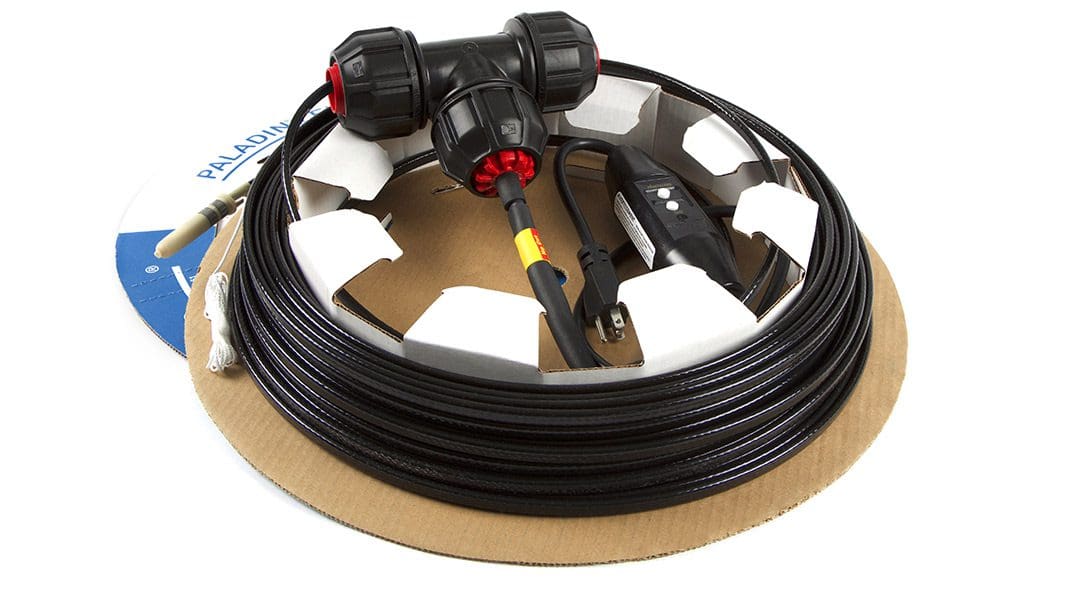
Advantages of the Retro-Line water line heating cable system for a heated water line at the cottage:
- No need to excavate.
- Fully dependable.
- Longest lasting system on the market.
- Unique end seal that is safe and reliable.
- Is easy to install.
- Fully certified for electrical and drinking water safe.
Disadvantages of outdated water line heat tape, constant-wattage or large online retailer systems:
- Short lifespan, needs to be replaced often.
- Does not stand up to the extreme temperatures on lakeshores.
- Can overheat.
- Should not be trusted for an essential utility such as water supply.
- Not energy-efficient.
- End seals may be toxic and unsafe for drinking water, unreliable and of poor-quality.
- May not be certified electrically or drinking water safe. Always check.
Below is a typical configuration for using the Retro-Line in pipe heating cable system by Heat-Line to winterize a lake water system.
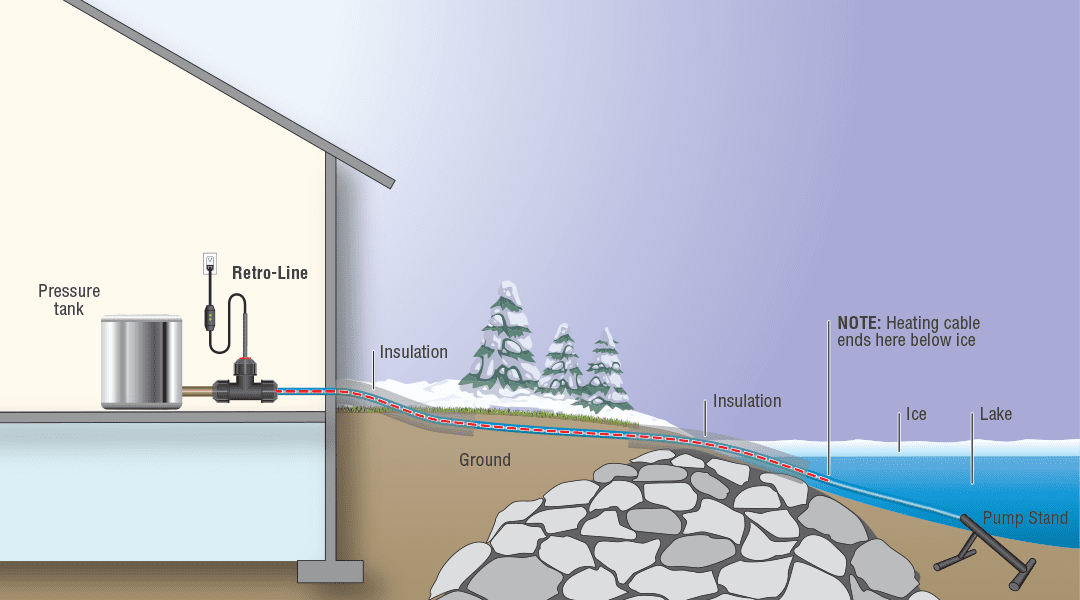
4 Steps to Winterize your Water Line from the Lake
1. Measure and Prepare
Measure the length of the pipe that needs heating, measure the diameter of the pipe and determine the pipe type. Order the Retro-Line system to this length and suitable fittings for the pipe. (Heat-Line can help with this if you are unsure what you need.)
2. Install the System
Start at the end of the pipe inside the building. Cut the pipe to accommodate the fittings and install the heating cable into the pipe. Install the included fittings onto the pipe creating a watertight seal. Homeowners can install this themselves, though others may prefer hiring a plumber for the job. (Follow the Installation Instructions for complete and accurate instructions.)
3. Insulate
Once the system is installed, insulate any sections of pipe that are exposed above ground. Use appropriate insulation material recommended for outdoor and wet locations.
4. Connect to Power
Plug in the system to a power source as per the Installation Instructions. Ensure the power supply is adequate and meets all safety requirements.
If you’re looking for a worry-free way to winterize your water line with a heated water line from a lake, the answer can be much simpler than you might expect.